Hydrogen Cars Are a Pipe Dream
Specifically – it’s a dream of people who have the most pipes built: the oil and natural gas industry. They want to keep using these pipes, climate crisis or not, so they are trying their best to confuse us, using tactics perfected by the tobacco industry.
If you are not an expert, it is hard to understand these complex issues, but there are some shortcuts, like this one simple illustration:
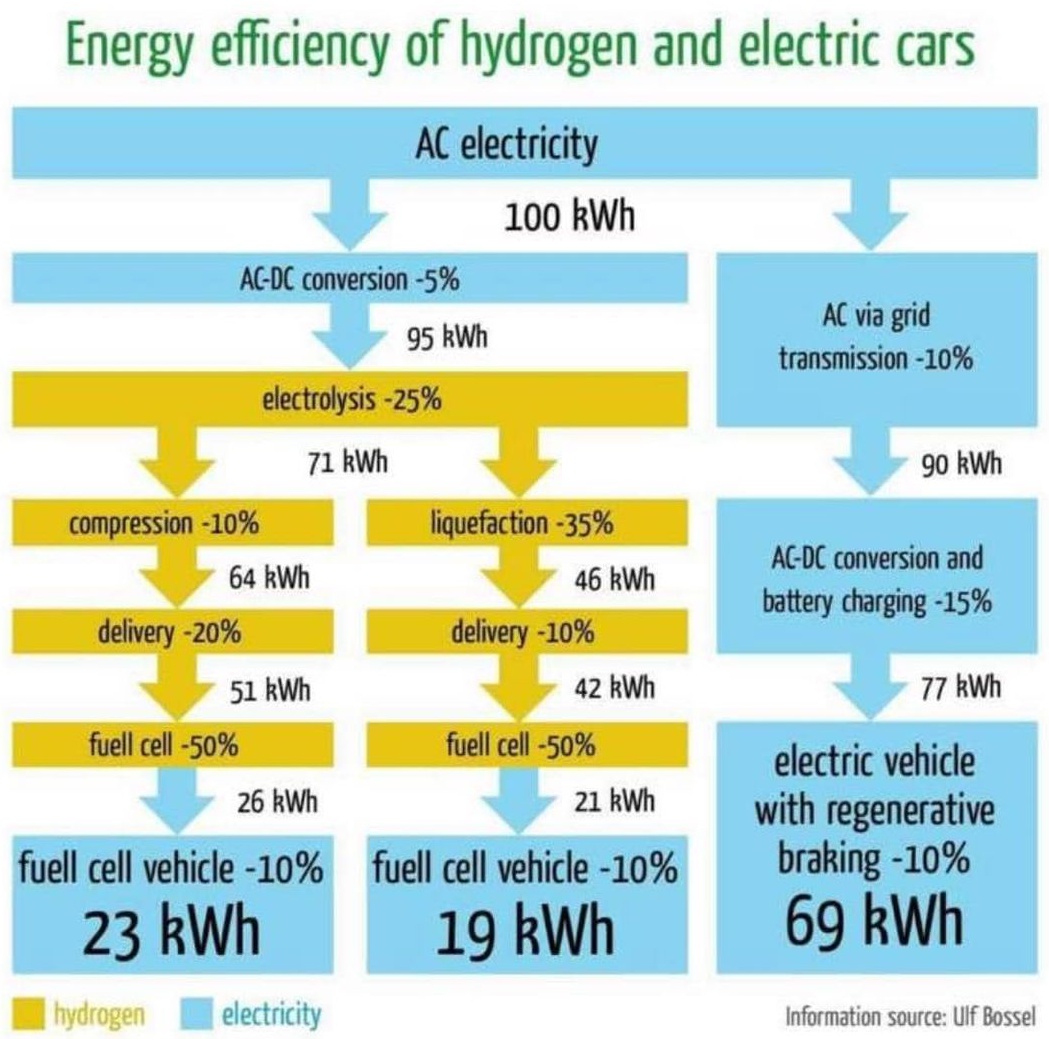
What does it all mean? If you want to drive about 7km with your car, you need about 1kWh of energy brought to your wheels. For a battery-powered EV, this means a power plant somewhere must produce about 1.5kWh of energy. On the other hand, if you have a typical hydrogen-powered car, it must produce about 4.3kWh (almost three times as much) of energy to produce, pump, deliver and convert the hydrogen needed to travel the same distance.
An EV wastes less than a third of energy while a hydrogen car wastes more than three quarters. Unfortunately, it is impossible to improve this in any significant way because of the underlying rules of physics. And keep in mind that this is just the main issue with hydrogen (there is a myriad of others; for starters, you will never ever be able to fill your car with hydrogen at home, period).
To be fair, hydrogen does have it’s uses, but these are all extremely capital-intensive and not something you can do at home. This article is a good starting point, if you want to learn more.
But What About Synthetic Fuels?
Synthetic fuels are an extension of the hydrogen pipe dream.
Remember how inefficient hydrogen is? All synthetic fuels proposed so far (e-fuels, ammonia, etc.) use hydrogen as feedstock. This means you lose half the energy before you even start making the fuel itself from hydrogen, lose even more to the chemical conversion, and then you burn it in an internal combustion engine that wastes two thirds of the little energy you have left. Compared to that, even hydrogen is a less worse solution.
There are some use cases where it’s hard to use any other energy sources than hydrocarbons (long-haul aviation and shipping), but these would be better served by using bio-fuels, once we stop wasting them on fuel cars and trucks.
A good source of nuanced info about viable green energy sources is Michael Barnard on Medium.